
Hotjar.com, What Is It? A Clear 2026 Explainer
August 19, 2026
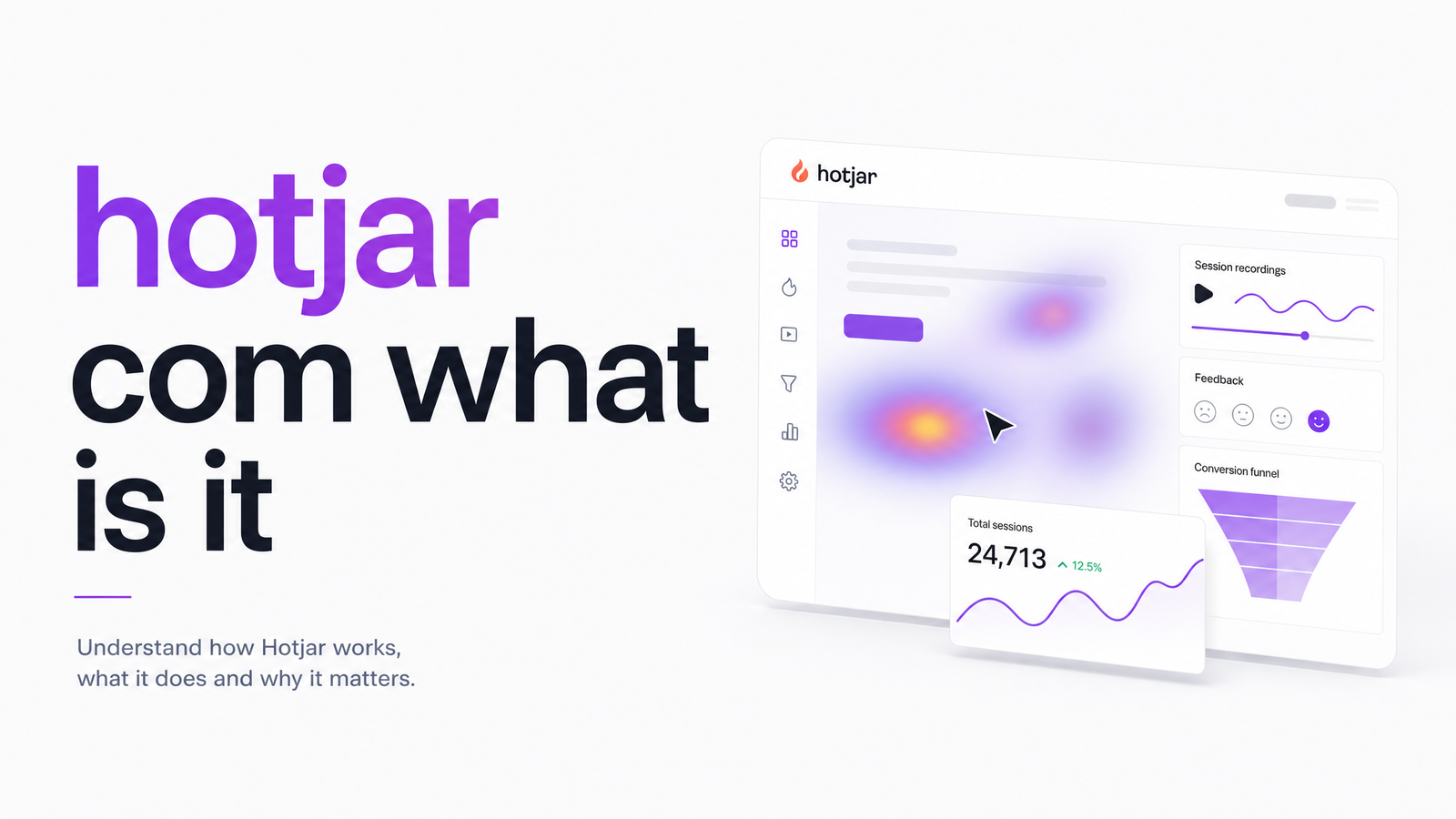
What Is Hotjar.com?
Hotjar is a behavior analytics and feedback platform that shows how real visitors interact with a website through heatmaps, session recordings, and on-page surveys. It doesn't tell you why a page loads slowly or fails an accessibility check — it tells you where people click, how far they scroll, and where they get stuck or leave.
Founded in 2014 by David Darmanin, Hotjar became one of the easiest ways for marketers and product teams to visualize on-site behavior without touching code. Practically, it's used for conversion rate optimization and UX research — spotting friction on landing pages, checkout flows, and forms. As of July 2025, Hotjar is part of Contentsquare, which changes some of what you'll find on hotjar.com today — more on that below.
What Does Hotjar Actually Do?
Hotjar's toolkit covers four core areas. Heatmaps aggregate clicks, taps, and scroll depth across a page so you can see where attention concentrates and drops off — we've broken down that mechanic and its limits in our Hotjar heatmap deep-dive.
Session recordings capture anonymized playback of individual visitor sessions — mouse movement, clicks, rage clicks, form hesitation — so you can watch, not just infer, how someone navigated your site. Closely related is click tracking; our click tracking explainer covers what it does and doesn't measure.
Surveys and feedback widgets let you ask visitors direct questions — exit-intent surveys, on-page polls, or Net Promoter Score campaigns. If you're planning your own NPS program, see our guide on running NPS surveys correctly. Finally, funnels and form analysis show where users abandon a multi-step process, often the fastest way to spot a leaky checkout or signup flow. Gartner Peer Insights corroborates this same core feature set — heatmaps, recordings, surveys, and feedback tools — as the product's defining strengths.
Is Hotjar Still Hotjar? The Contentsquare Merger, Explained
Here's the part most outdated articles miss: Hotjar merged into Contentsquare in July 2025. If you're asking "is Hotjar still around" in 2026, the answer is yes, but not as a standalone company — it now operates as a Contentsquare product line, with plans and billing folded into Contentsquare's structure over time.
For existing users, dashboards and data generally continue functioning, but account management, plan tiers, and support increasingly route through Contentsquare's systems. New users may notice Contentsquare branding, bundled feature sets, or upsells toward Contentsquare's broader experience analytics suite, which includes deeper session replay and journey analysis beyond Hotjar's original scope. The official Contentsquare support documentation on Hotjar's new plans and pricing is the most reliable source for current account-specific changes, worth checking directly if you're mid-signup or renewing a contract.
Practically, think of Hotjar vs Contentsquare less as two competing products and more as one platform absorbing another — Hotjar's simpler, budget-friendly tools sitting inside a larger enterprise analytics ecosystem.
How Much Does Hotjar Cost?
Hotjar retains a free tier for lower-traffic sites and basic use, plus paid tiers that historically started around $49/month for small teams needing more sessions, filters, and data retention. Higher tiers scale toward custom Pro and Enterprise pricing based on traffic volume and feature needs.
The caveat for 2026: pricing is actively being unified under Contentsquare's broader structure, so tier names, limits, and exact costs are shifting compared to Hotjar's pre-merger pricing page. FullSession's 2026 Hotjar review walks through the post-merger changes in more depth if you want current numbers before committing. If you're also weighing Hotjar's cost against a diagnostic audit tool, Optimevra's pricing page lays out a straightforward comparison point.
What Hotjar Doesn't Show You
This is the gap nobody selling Hotjar will spell out clearly: behavior analytics tools show you what happened, not why it happened at a technical level. A heatmap can show that visitors abandon a page halfway down — it can't tell you the page has a Largest Contentful Paint over four seconds, a missing alt attribute breaking screen-reader navigation, or a form field unreachable by keyboard. A rage-click cluster on a button might mean the copy is confusing, or it might mean the button is broken on mobile Safari and nobody tested it there.
That's the core Hotjar limitation worth understanding before installing another tracking script: it's a lens on user behavior, not a diagnostic of your site's underlying UX, accessibility, or performance health. If you're searching for a Hotjar alternative because you need root-cause answers rather than behavioral evidence, you're actually looking for a different category of tool entirely — not a replacement, but a complement.
Where a Tool Like Optimevra Fits In
This is exactly the gap Optimevra is built for. Where Hotjar tells you visitors are dropping off a page, Optimevra runs an AI-powered website audit that explains why — surfacing UX friction, accessibility violations, performance bottlenecks, and conversion-blocking issues in the underlying code and structure of the page itself.
Used together, the two tools tell a complete story: Hotjar's session recordings show a visitor hesitating on a form, and an Optimevra audit reveals that the form field lacks a visible label and fails a basic accessibility check likely causing exactly that hesitation. If you want to fix UX and accessibility issues rather than just observe their symptoms, that pairing — behavior data plus diagnostic audit — is far more actionable than either tool alone. See this in action with a live Optimevra demo.
Behavior analytics and diagnostic audits answer different questions, and confusing the two is why teams sometimes install heatmap tools expecting them to explain bugs. They won't — that's not a knock on Hotjar, just a reminder that "what users do" and "why the site is broken" are separate problems requiring separate tools.
Frequently Asked Questions
Is Hotjar free to use?
Yes, Hotjar offers a free tier suitable for lower-traffic sites and basic heatmap or recording needs. Paid plans unlock higher session limits, longer data retention, and advanced filtering, with pricing currently being restructured under Contentsquare's unified plan system.
What is Hotjar used for on a website?
Hotjar helps you understand how visitors behave on a site — where they click, how far they scroll, where they hesitate, and what they say in feedback surveys. It's primarily applied to conversion rate optimization and UX research on landing pages, checkout flows, and forms.
Is Hotjar the same company as Contentsquare now?
Hotjar merged into Contentsquare in July 2025 and now operates as a Contentsquare product rather than a standalone company. Existing accounts continue to function, but billing, plans, and support are increasingly managed through Contentsquare's systems.
Does Hotjar slow down my website?
Hotjar runs via a lightweight tracking script, and like any third-party script it adds some load, though it's generally designed to load asynchronously to minimize impact. If page speed is a concern, a technical audit tool can quantify the actual performance cost more precisely than assumptions alone.
Is Hotjar a Google Analytics alternative or does it work alongside it?
Hotjar works alongside Google Analytics rather than replacing it. Google Analytics reports quantitative traffic and conversion metrics, while Hotjar adds qualitative context — heatmaps, recordings, and surveys — showing the behavior behind those numbers.
What's the difference between Hotjar and a website audit tool like Optimevra?
Hotjar shows what users do on your site through behavior analytics like heatmaps and session recordings. Optimevra diagnoses why a page underperforms by auditing UX, accessibility, and performance issues in the site itself, making the two genuinely complementary rather than competing tools.
Hotjar can show you that visitors are struggling on a page, but it won't tell you if that struggle traces back to a slow load time, a broken accessibility feature, or an indexability problem search engines can't get past. If you want that missing half of the picture, run a free audit with Optimevra and see exactly what's costing your site conversions.
Originally published on Rankevra.